
Hair Loss Treatment in Kharghar, Navi Mumbai
Hair Fall and Hair Thinning: Find the Cause First
Hair fall, a widening parting, a receding hairline or a thinner ponytail are among the most common reasons people look for a hair doctor in Kharghar and Navi Mumbai. Hair loss is a symptom with many possible causes, so the right treatment depends on what is behind it.
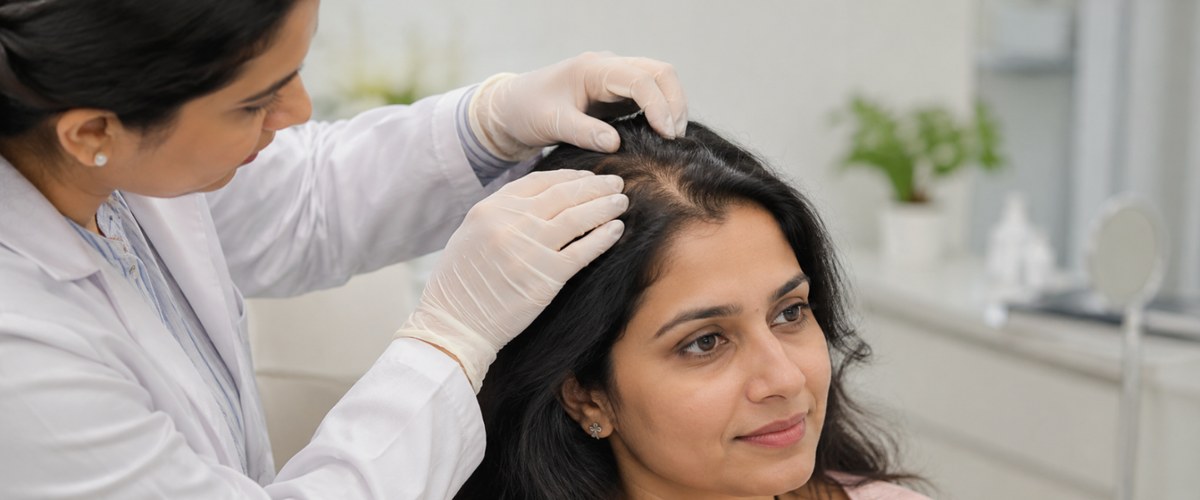
At Dr. Gunjan Gangaraju's clinic in Sector 21, Kharghar, a hair loss consultation starts with a scalp check and a discussion of your history. Treatment options are discussed only after that. This page explains the common causes, how the cause is found, the hair treatments offered at the clinic and when to see a doctor.
Common Causes of Hair Fall in Men and Women
More than one cause is often present at the same time. Common ones include:
Pattern Hair Loss (Androgenetic Alopecia)
The most common cause of long-term thinning. In men it usually shows as a receding hairline and thinning at the crown. In women it usually shows as a widening parting and reduced volume on top of the scalp. It is linked to genetics and hormones and tends to progress slowly.
Sudden Shedding After Stress or Illness
Fever, infection, surgery, rapid weight loss, childbirth or a period of significant stress can push many hairs into the shedding phase together. The hair fall typically starts a few weeks to months after the event.
Nutritional Deficiencies
Low iron stores, low vitamin D or vitamin B12 and inadequate protein intake can contribute to hair fall.
Thyroid and Hormonal Conditions
Thyroid disorders, polycystic ovary syndrome (PCOS) and hormonal changes around pregnancy and menopause can affect hair growth.
Scalp Conditions
Dandruff, seborrhoeic dermatitis, fungal infection and other scalp problems can cause itching, flaking and hair fall.
Medications
Some medicines list hair fall as a possible side effect. Do not stop a prescribed medicine on your own; discuss it with your doctor.
Hair Styling and Traction
Tight hairstyles, frequent heat styling and chemical treatments can damage hair and, over time, the hairline.
Patchy Hair Loss
Smooth, round bald patches may point to alopecia areata, an immune-related condition that needs a medical assessment.
How We Find the Cause
The assessment decides the treatment, so it comes first.
1. History
When the hair fall started, how it has progressed, family history, recent illness or stress, diet, medicines, menstrual and hormonal history where relevant, and treatments you have already tried.
2. Scalp and Hair Check
The scalp and hair are examined for the pattern of thinning, the condition of the scalp and the state of the existing hair follicles.
3. Blood Tests If Needed
If a nutritional, thyroid or hormonal cause is suspected, blood tests may be advised. Not everyone needs tests.
4. Treatment Plan
The likely cause, the available options, what each can and cannot do, and the alternatives are discussed before any procedure is chosen. If a condition needs care that the clinic does not provide, you will be told so.
Hair Treatments Offered at the Clinic
Each treatment has its own page with full details. Suitability is decided at consultation.
GFC Hair Treatment
Growth Factor Concentrate is prepared from your own blood and delivered to areas of thinning on the scalp. Read about GFC hair treatment.
Hair PRP Treatment
Platelet-rich plasma is prepared from your own blood and injected into the scalp. Read about hair PRP treatment.
Hair Exosome Treatment
An emerging regenerative approach using exosome-containing preparations. Research is still developing. Read about hair exosome treatment.
Hair Filler Treatment
A scalp treatment using formulations that contain selected active ingredients such as peptides. Read about hair filler treatment.
Anti-Dandruff Treatment
Care for flaking, itching and scaling of the scalp. Read about anti-dandruff treatment.
Procedures are often only one part of a plan. Correcting a deficiency, treating a scalp condition or medical treatment advised by your doctor may also be needed.
Which Option Suits Whom?
The table below is a general guide. It does not replace an assessment.
| Your concern | What is usually discussed |
|---|---|
| Early thinning or pattern hair loss with existing hair in the area | GFC or Hair PRP, often alongside medical treatment |
| Interest in newer regenerative options | Hair Exosome, with a discussion of the current evidence and its limits |
| Thin, weak hair or a preference for a treatment that does not use your own blood | Hair Filler |
| Flaking, itching or an oily, scaly scalp | Anti-Dandruff Treatment first; hair fall is reassessed once the scalp settles |
| Sudden shedding after illness, childbirth, stress or weight loss | Finding and correcting the trigger; procedures are not always needed |
| Smooth bald areas with no visible hair for a long time | Scalp procedures support existing follicles and are unlikely to help here; other options such as hair transplant surgery may be discussed |
Number of Sessions and Follow-Up
The number of sessions and the gap between them vary from person to person and are decided at consultation. They depend on:

The cause and stage of hair loss
The treatment chosen
The condition of the scalp and existing follicles
How your hair responds over time
Hair grows slowly, so any change is assessed over months, not days or weeks. Follow-up visits are used to review progress and adjust the plan. Pattern hair loss is a long-term condition and may need ongoing management. Results vary and cannot be guaranteed.
When Should You See a Doctor for Hair Fall?
Some hair shedding every day is normal. Consider a consultation if you notice:
Hair fall that is clearly more than usual and continues for more than a few weeks
A widening parting, receding hairline or visible scalp
Round or patchy bald spots
Sudden hair fall in clumps
Itching, burning, pain, redness, scaling or sores on the scalp
Hair fall along with tiredness, weight change or irregular periods
Hair fall that began after starting a new medicine
Hair loss in a child or teenager
Seeing a doctor early matters because treatments work on existing follicles. It is easier to support thinning hair than to restore hair in an area that has been bald for years.
Cost of Hair Loss Treatment in Kharghar
The cost depends on the treatment chosen, the area treated and the number of sessions planned. Because the plan is decided after the scalp check, the fee for your treatment is explained at consultation, before you decide to go ahead.
For current consultation fees, call +91-7700960477.
Hair Doctor in Kharghar, Navi Mumbai
Dr. Gunjan Gangaraju (MBBS, IFAAM, FCGP) is an aesthetic physician who sees patients with hair fall and hair thinning at her clinic in Kharghar. You can read more about Dr. Gunjan Gangaraju.
Clinic Address:
First Floor, Shop No. 74–77, Chaturbhuj HSG, Plot No. 61, Sector 21, Kharghar, Navi Mumbai – 410210
Call:
Frequently Asked Questions About Hair Loss Treatment
Losing roughly 50 to 100 hairs a day is generally considered normal. A clear increase from your usual amount, or visible thinning, is a reason to get checked.
There is no single best treatment. The right option depends on the cause and stage of hair loss, the condition of your scalp and your medical history. That is why the assessment comes before the treatment.
Only if a nutritional, thyroid or hormonal cause is suspected after your history and scalp check. Many people do not need them.
It varies with the cause, the treatment and your response. The plan is decided at consultation and reviewed at follow-up.
Hair grows slowly, so changes are judged over several months. Some people notice less shedding before they notice any change in density. Results vary and cannot be guaranteed.
Scalp procedures such as GFC and PRP are aimed at supporting existing follicles. An area that has been smooth and bald for a long time is unlikely to respond, and a different approach may be discussed.
The pattern and the likely causes differ. In women, hormonal, thyroid and nutritional causes are checked more often. The procedures offered are similar, but the plan is individual.
You can consult Dr. Gunjan Gangaraju at First Floor, Shop No. 74–77, Chaturbhuj HSG, Plot No. 61, Sector 21, Kharghar, Navi Mumbai. Call +91-7700960477 to book.
Our Treatments
